Own your intelligence, or rent the API?
Developers start building AI products by tokenmaxxing. Calling frontier APIs and paying per token.
Then the bill shows up. Or the agent feels slow. Or legal asks where the data goes. Suddenly "just use the API" might not be the right strategy.
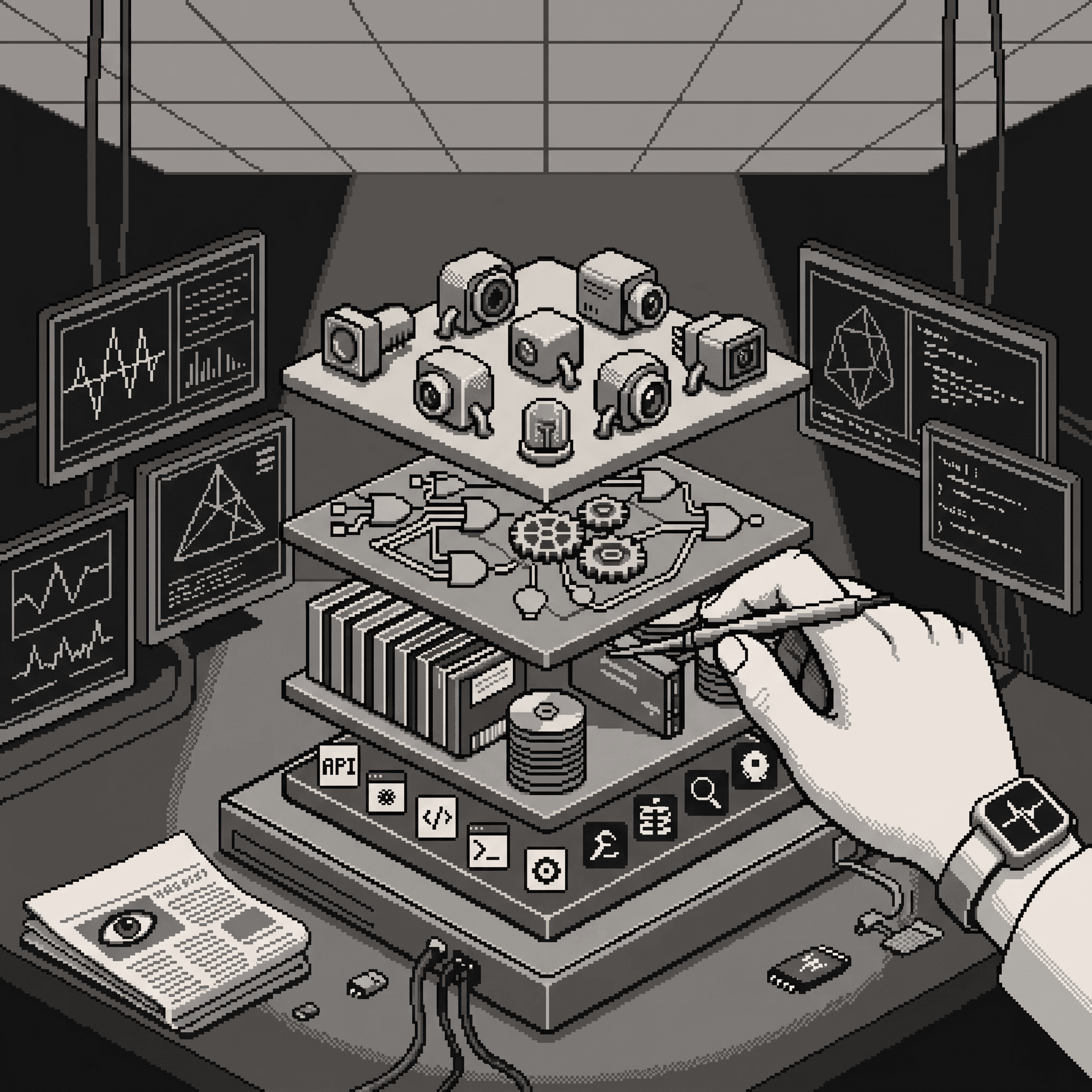
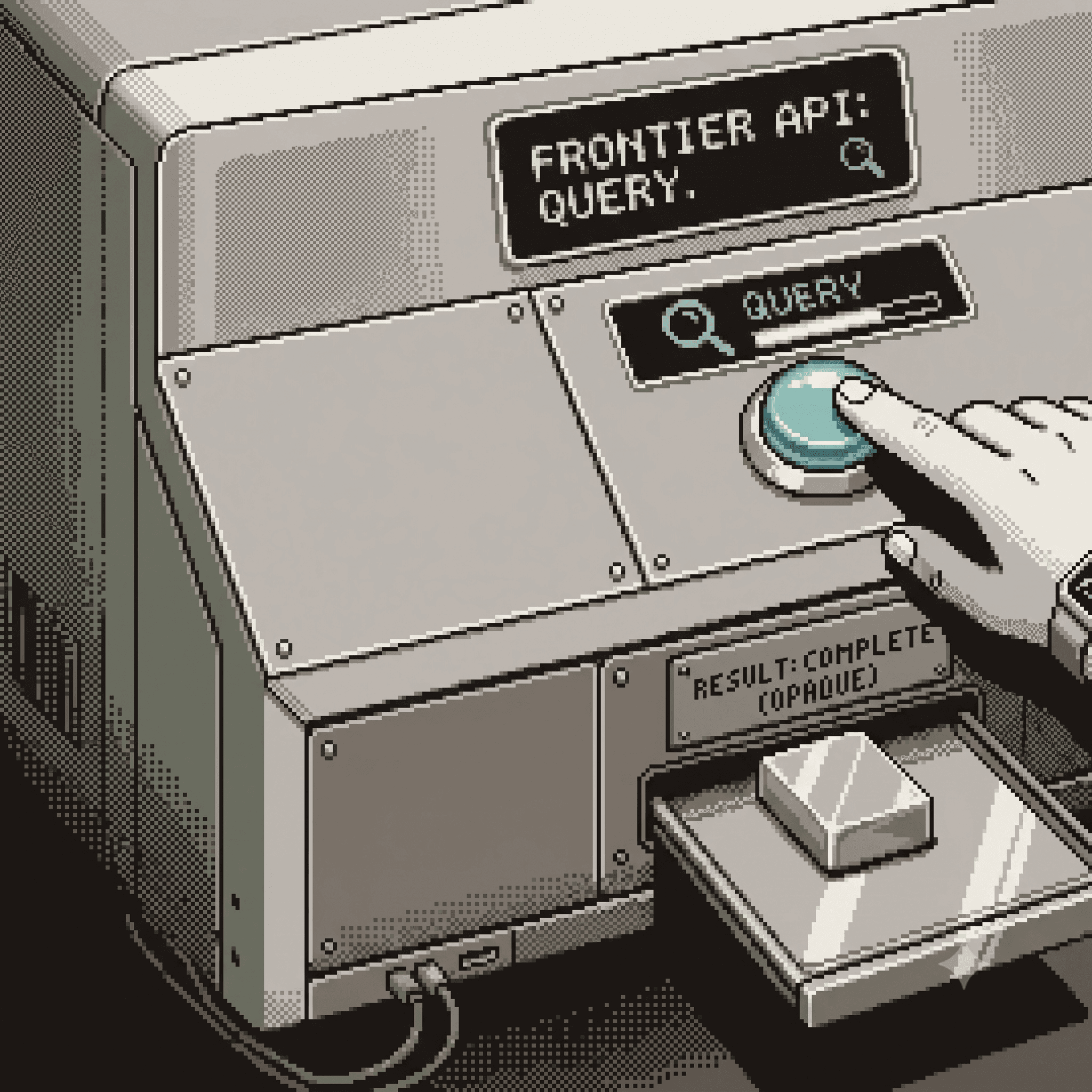
Underneath every AI product is one choice: rent a frontier API, or own a model. Renting means closed weights: someone else trains it, serves it, and sets the price. Owning means picking the model, post-training it and running self-hosted or third-party inference.
This piece is the practical guide to open vs closed models.
The trade-offs
LLM inference cost: when open-weights beat the API
Renting feels cheap at the start, especially when showered with credits.
Then usage grows. The bill grows and a painful chunk of that spend is frontier prices for work a smaller specialised model could do.
Owning the model changes that. You pay upfront: a LoRA / QLoRA fine-tune, inference setup, some evals. After that, per-token cost is a fraction of the API. Somewhere on the volume axis the lines cross. That crossover point is where a self-hosted open-weights LLM stops being a science project and starts being the cheaper path.
This is not theory. A LoRA fine-tune of a 7B-8B open-weights model on a few thousand trajectories often costs a few hundred dollars.
Beyond cost: latency, data residency, and vendor lock-in
Your agent feels sluggish
A small model you serve has no hop to someone else's cluster and fewer parameters per forward pass. If your AI agent makes dozens of tool calls per task, 200ms vs 2s is not a benchmark flex, it is whether the product feels alive. Lower time to first token (TTFT) compounds across the whole agent loop. Users notice the speed. They leave when it isn't there.
Your data cannot leave the building
When you rent, prompts and completions leave your perimeter. For fintech, healthcare, or anyone under data-residency, GDPR, or HIPAA rules, that is not a preference. It is a hard no. A private LLM, self-hosted or VPC-hosted open-weights, is not an optimisation. It is how you ship at all.
The vendor moved the goalposts
Renting means their roadmap, their rate limits, their deprecation calendar. When they sunset the model your agent was tuned around, you re-tune on their schedule. Owning means your inference stack and your weights. Still a dependency, but one you control.
When to use open-weights vs a frontier API
Own (open-weights, self-hosted) when:
- volume is high and climbing
- the task is narrow
- latency is a product problem
- data cannot leave your perimeter
- the model is your edge
- you know what you are building
Rent (frontier API) when:
- volume is low or spiky
- the task is broad and messy
- latency is fine
- data has no residency limits
- raw frontier capability matters most
- you are still finding out
FAQ: fine-tuning open-weights vs using a frontier API
Do I need a team of ML engineers to fine-tune an open-weights LLM?
No. LoRA / QLoRA plus a managed inference host (Fireworks, Together, Modal, or vLLM on your own GPUs) is within reach of one strong engineer. The hard part is not GPUs. It is good training data and honest evals.
Which open-weights base model should I start with?
Pick a family that fits your license and task: Llama, Qwen, Mistral, or DeepSeek. Start small. A 7B-8B model, fine-tuned on your task, handles more production work than most teams expect.
What if a better frontier model ships next month?
If you rent, you get the upgrade (until the API changes). If you own, you decide whether to re-tune. Here is the part people miss: a small model trained on your production trajectories often still wins on your cost, latency, and task metrics. That is the scoreboard that pays the bill, not the leaderboard screenshot.
Is my data really at risk on a frontier API?
For most consumer SaaS a zero-retention, no-training contract covers you. For regulated data, get an explicit guarantee in writing or run a private, self-hosted LLM. Do not guess.
Fine-tuning on production data is the real moat
Owning only works if your model is actually better at your task than the rented one. Downloading open-weights does not get you there. Fine-tuning on your production data does: traces, tool-call trajectories, preference pairs, real evals from real usage.
Overmind is the model training platform for AI teams. It turns your production traces into specialised models you own. Get started.